Water Safety for Remote, Island and Offshore Projects in Western Australia - How rescue vessel capability can be mobilised to challenging project locations
If your project is located at a remote, isolated or offshore marine worksite in Western Australia, water safety requirements do not become any less critical simply because the nearest support services are hundreds of kilometres away.
Many of WA's mining, marine infrastructure and maintenance projects are undertaken in locations where access is limited, mobilisation is complex and emergency response resources may not be readily available. From remote export facilities and shiploader maintenance campaigns through to island infrastructure projects and offshore works, effective water safety planning becomes an essential component of project delivery.
For project managers and HSE teams operating in these environments, the challenge extends beyond compliance. Rescue capability must be practical, reliable and capable of being deployed wherever the work is taking place.
What are the water safety challenges at remote marine worksites?
Many water safety arrangements are designed around projects with easy access to emergency services, replacement equipment and support personnel. Remote and isolated marine worksites present a different challenge.
At locations such as remote port facilities, export terminals, jetties and coastal infrastructure sites, project teams often need to consider:
Extended emergency response times
Mobilisation of rescue equipment and personnel
Limited local support infrastructure
Communication limitations
Weather and access constraints
Long-duration maintenance and shutdown campaigns
These factors can significantly influence the selection of rescue vessels, emergency response procedures and overall water safety arrangements.
The Remote Mobilisation Challenge
Remote and isolated projects often present unique logistical challenges.
Most standby rescue vessel providers are set up for accessible coastal and port environments. Remote island projects require a different approach — one that accounts for the logistics of getting a vessel and qualified crew to site, keeping them operational for the duration of the project, and ensuring they can respond effectively in an environment with no nearby support infrastructure.
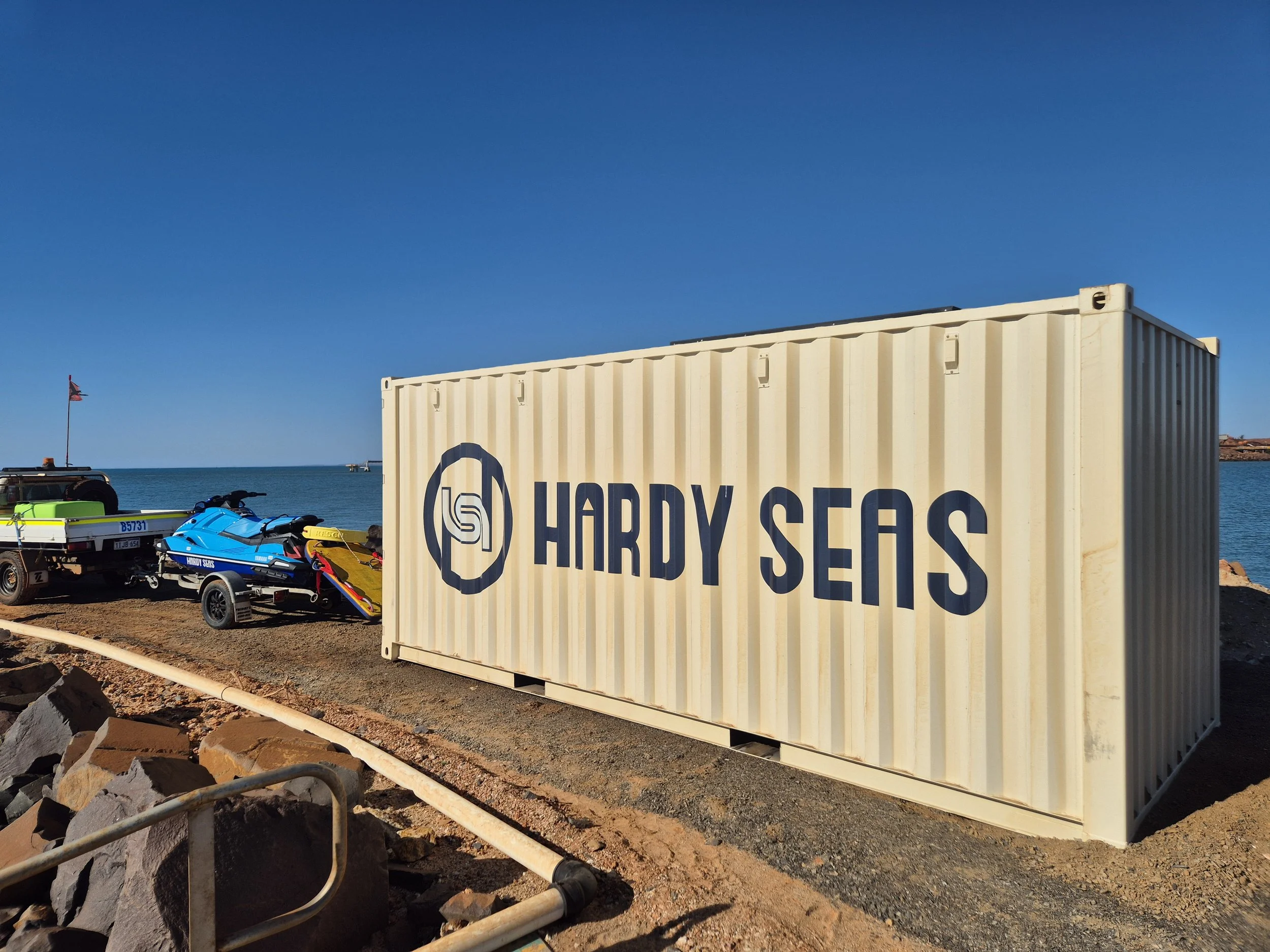
Hardy Seas addresses this through a purpose-built mobilisation model. Our PWC rescue vessel and all associated safety equipment — rescue sled, personal flotation devices, communication equipment, and first aid kit — can be packed and transported in a standard 20ft sea container. This means the entire water safety capability can be shipped to virtually any location in Australia, set up on site, and be operational within hours of arrival.
Why a PWC is the right vessel for remote island projects
In remote and island environments, a PWC rescue vessel offers significant advantages over larger conventional rescue boats. It can be launched and retrieved quickly via crane, beach or boatramp, operates effectively in shallow reef and nearshore environments, is highly manoeuvrable in confined spaces around jetty piles and marine structures, and requires minimal on-site support to keep operational.
For projects on remote sites & islands, this self-sufficiency is critical. Hardy Seas crews are trained to operate independently in remote environments, carry out mock rescue drills with site personnel, and maintain compliance documentation throughout the project duration.
What this means for your project
If you are planning a construction or maintenance project on a remote WA island or offshore location, water safety compliance is still a legal requirement under WA work health and safety legislation — regardless of how remote your site is.
Hardy Seas can mobilise to remote island locations across Western Australia. Get in touch to discuss your project requirements and we can advise on mobilisation logistics, crew requirements, and compliance documentation.